AI in logistics that answers “where is my pallet?” for you.
We build AI agents for carriers, freight forwarders and logistics providers: carrier emails read and filed, proofs of delivery checked and attached, customer tracking questions answered from your TMS, booking requests turned into orders. Your operators keep the exceptions, the ones that need judgment.
- Carrier emails
- Proofs of delivery
- Tracking questions
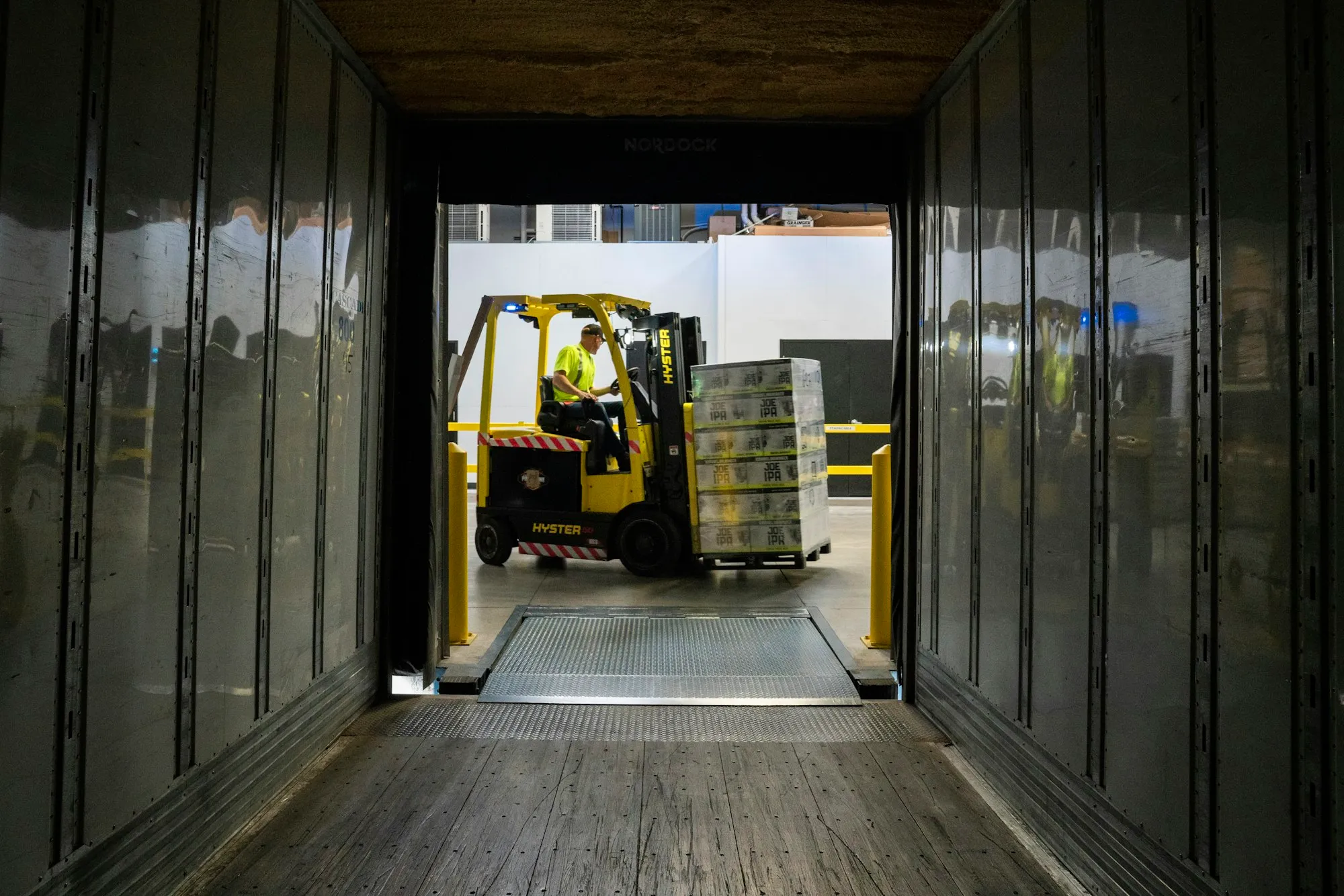
What AI in logistics handles well today
AI in logistics is most useful in the stream of messages and documents around each shipment. It reads carrier and customer emails, proofs of delivery, consignment notes and booking requests, links each one to the right shipment in your TMS or WMS, updates the status and drafts the reply. Route planning stays with dedicated software.
Operations teams receive everything they need, and rarely have the time to read it: status updates arrive as free text, a signed delivery note is a photo on a driver’s phone, a dock appointment is confirmed in the third message of a thread. An agent reads all of it as it comes in, and your TMS shows the result.
Customers asking where their goods are get an answer drawn from the latest status, with the proof attached when there is one. When the status is unclear, the question goes to the operator in charge, with the shipment already open.
What your operators live with today
- Operators spend the day answering “where is my pallet?” by phone and email.
- Carrier updates arrive as free text, and someone copies them into the TMS.
- Proofs of delivery come back as phone photos, and invoicing waits until one is found.
- Booking requests are retyped from the emails and spreadsheets customers send.
- A reservation written on a delivery note is discovered when the claim arrives.
Three logistics flows to hand to an agent
Each one starts from documents and messages you already receive, and ends in your TMS.
01
Carrier emails read and filed
Status updates, delays and incidents are read from carrier emails, matched to the shipment and written to the TMS. Anything that changes a delivery promise is flagged to the operator.
AI agents02
Proofs of delivery checked
Scans and photos of signed notes are read and attached to the right shipment. Any reservation written by the consignee is raised before invoicing.
Document AI03
Tracking calls answered
A voice or chat agent answers questions about a shipment from its TMS status, day and night, and passes the call to a person when it matters.
Voice AI agents
AI in logistics: what the agent takes, what your TMS keeps
The agent works next to your transport software. Here is how the work splits between the agent, your TMS or WMS and your operators.
| Task | The AI agent | Your TMS or WMS | Your operator |
|---|---|---|---|
| Carrier status emails | Reads each one and links it to its shipment | Stores the updated status | Sees only the shipments where a promise changed |
| Proofs of delivery | Reads the photo or scan and flags any reservation | Holds the document on the shipment | Decides on reservations before invoicing |
| “Where is my pallet?” | Answers from the current status, by email, chat or phone | Provides the status | Takes the calls that go beyond the status |
| Booking requests | Extracts the details from the customer’s email or spreadsheet | Receives the booking | Checks the unusual ones |
| Route planning | Stays out of it | Plans the routes, or hands over to your dedicated planning tool | Adjusts the plan |
| Claims | Gathers the proof of delivery, the reservation and the exchanges | Keeps the shipment history | Accepts or rejects the claim |
Illustrative scenario
A morning of carrier emails, handled before the first call
Illustrative scenario: Léa and her company are fictional. She runs the operations desk of a mid-sized freight forwarder. Every morning the shared inbox holds carrier updates, delivery proofs sent as photos and customers asking about their goods. Here is how an agent would take that inbox on, using the same document reading you can test in our live demo.
No result figures: this is a scenario. Your figures come from your own cases, measured during the first weeks.
- Each carrier email is read and linked to its shipment, whatever the carrier’s format
- Signed delivery notes are read from the photo, and any reservation is flagged to Léa
- Customer questions get a drafted reply with the current status and the proof attached
- Léa sees only the shipments where something changed, in one list
Rules that shape a logistics AI project
- Electronic freight information (eFTI)The EU eFTI regulation (2020/1056) sets the framework for authorities to accept freight transport information in electronic form. An agent that reads and structures your transport documents prepares your data for that shift.
- Driver and consignee dataNames, signatures and phone numbers on proofs of delivery are personal data. They stay in Europe, with retention set by your rules.
- The operator decides on exceptionsThe agent never changes a delivery promise or accepts a claim on its own. It prepares, the operator decides, and each action is logged.
- Your TMS stays the referenceStatuses are written to your TMS or WMS, through their API or import files. Your reporting and your customer portal keep reading from the same place.
Logistics and transport: your questions
Does the agent read our carrier emails?
Yes, and it is usually the first flow. It connects to the shared inbox, reads each message whatever the carrier’s format, and writes the result to your TMS. Messages it cannot place go to a person.
Which TMS and WMS do you connect to?
The ones you use, through their API, their import files or a database connection agreed with your IT team. We check the route during the free assessment, and when a system offers none, the agent works from the emails and exports it already sends.
Do you do route optimization?
That job belongs to dedicated planning software, and we connect to it when you have one. We work on the messages, documents and customer questions around each shipment. A delay the planner records reaches the customer the same way.
How long does a first agent take?
A first agent typically goes live in four to eight weeks, depending on the systems involved. Scope and price are fixed in writing before we start. It is tested on your past emails and delivery notes before it touches live shipments.
Can customers ask about their shipment by phone?
Yes. A voice agent answers tracking calls from the TMS status, day and night, and passes the caller to an operator when the status is unclear or the customer asks for a person. A summary of each call lands on the shipment.
Keep exploring
- All industries What AI changes, sector by sector
- AI use cases Every use case, by function and industry
- Wholesale and distribution Customer orders keyed in for you
- Manufacturing Quotes, quality and after-sales
- E-commerce “Where is my order?” handled end to end
- Document AI Delivery notes and transport documents read for you
- Document extraction demo A document read and checked, live
Clear your shared inbox before the first call.
Send us the flow that takes your operators’ mornings: carrier emails, proofs of delivery or tracking calls. We reply within one business day and book your free 30-minute assessment.